Inside Canada's Crypto Gambling Boom in 2026: How Top Bitcoin Casinos Work, What Licensing and Safety Rules Apply, and What Canadian Players Should Check Before Depositing
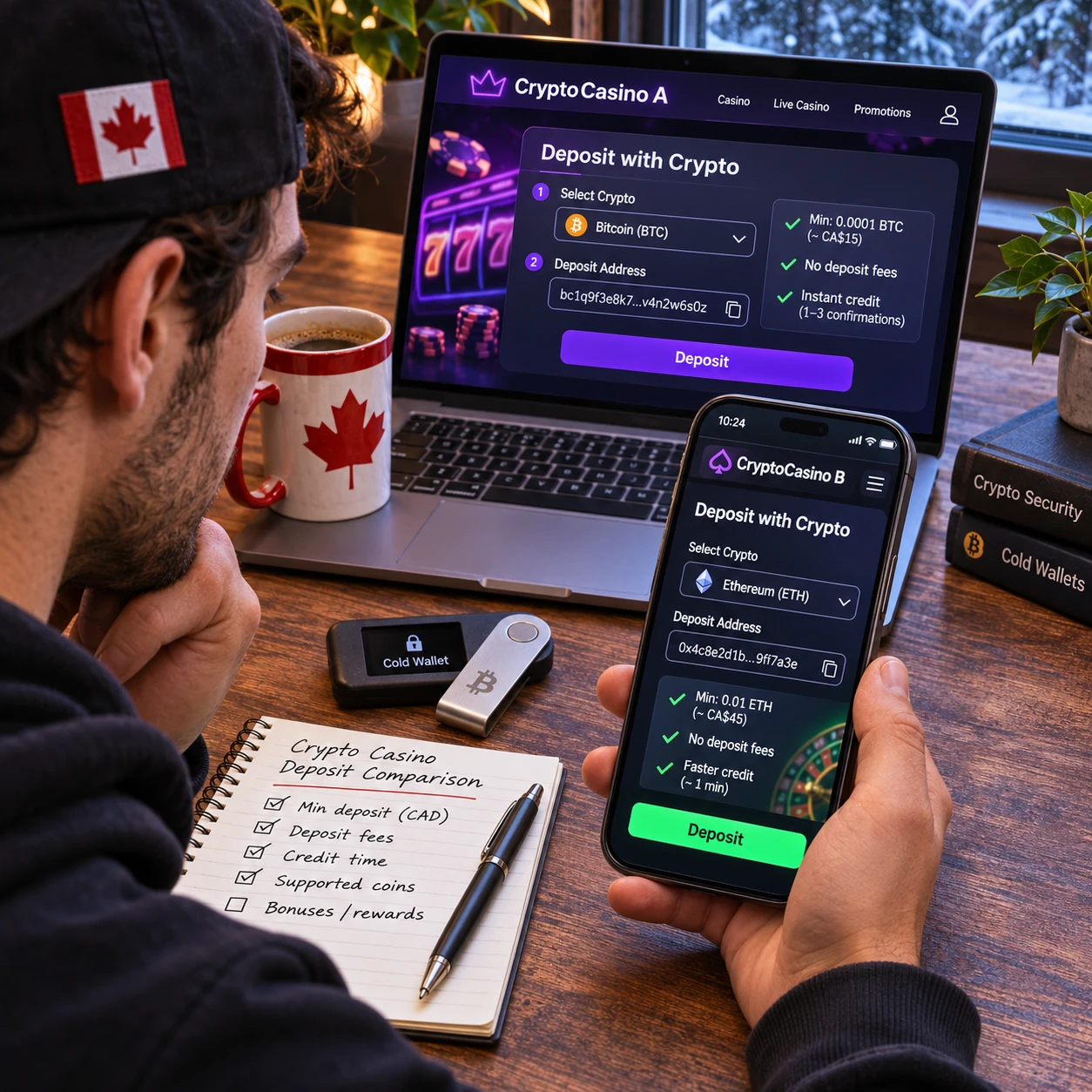
Most Canadian players I talk to still fund their casino accounts the same way they did five years ago. An Interac e-Transfer. A wait. Then a bank statement line they'd rather not look at too closely. But something's shifted. A growing share of deposits now lands as BTC, ETH, and stablecoins — sometimes straight out of an exchange app, sometimes from a self-custody wallet somebody set up after reading one too many threads about not trusting exchanges.
By 2026 the landscape looks different than it did even a couple of years back. Ontario's regulated iGaming market has grown into a real commercial framework, with hundreds of licensed operators. Provincial monopolies everywhere else now face competition from crypto-native sites that answer to nobody in Canada. And the ads are everywhere — podcasts, hockey intermissions, the sidebar of a recipe page. Which is exactly why a sober explanation is worth more than another listicle.
Here's what I want to do in this piece: walk through how these sites actually work, which rules genuinely apply to you as a Canadian, and what to verify before you send a single satoshi.
Why Canada's Bitcoin Casino Market Is Booming in 2026
Let me frame the growth honestly before anybody gets excited. Crypto casinos are growing in Canada for real, practical reasons. And also because they spend aggressively on marketing. Most coverage mashes those two things together, and that mashing is how players end up treating volume as legitimacy.
The practical drivers are easy enough to follow. Settlement is fast — a Bitcoin deposit usually confirms in minutes, while an e-Transfer or card withdrawal from a traditional operator can take a day or more. Provincial fragmentation matters too: live somewhere without a regulated commercial market and you're pushed toward offshore sites by default. Then there's mobile-first betting culture, which means the friction of installing a wallet app no longer feels like a barrier. It's just another step in a signup flow.
What's Actually Driving the Growth
Four forces do most of the work. First, deposit friction: crypto rails bypass the payment blocking that Canadian banks and card networks apply to gambling merchants, which is why credit card deposits often fail while a BTC transfer sails through. Second, cross-border payment restrictions that make some traditional funding methods unreliable. Third, plain crypto literacy — a meaningful chunk of Canadians now hold digital assets and understand how to move them. Fourth, the post-2021 expansion of single-event sports betting, which normalized online wagering nationally and trained a whole cohort of players to bet from their phones.
How Crypto Casinos Differ from Provincial Sites
The contrast is stark once you lay it out. Provincial platforms are geo-fenced to their province, KYC-first, and required to offer mandated responsible-gambling tools — deposit limits, self-exclusion, time tracking. Your recourse, if something goes wrong, runs through a regulator that actually answers to Canadian law.
Crypto casinos run on wallet-based accounts, apply KYC variably (often only at withdrawal, and often at the worst possible moment), and hold offshore licences. That doesn't automatically make them predatory. It does mean the safety net is thinner and the burden of due diligence lands on you.
How Top Bitcoin Casinos Actually Work
Understanding the mechanics is the difference between a confident deposit and a hopeful one. When you sign up, the site generally creates an account tied to an email address and, depending on configuration, either gives you a deposit address it controls (custodial) or lets you connect your own wallet (non-custodial). Most operators are custodial — your coins sit in their hot wallets until you withdraw. That's a credit risk you're accepting, and it's worth saying plainly.
Deposits, Wallets and On-Chain Payments
A deposit is a transaction on a public blockchain. The casino credits your balance after a set number of network confirmations — usually one to three for Bitcoin, more for chains with different finality characteristics. Choose the wrong network and the funds are typically gone. Sending USDT on Ethereum to an address that expects it on Tron is the single most common costly error I see.
Watch minimum deposits, and watch exchange-rate exposure. If you deposit BTC and the site denominates your balance in CAD, your playing funds move with the market while you're mid-session. Copy the address, verify the first and last six characters, and never paste from clipboard history without checking.
Provably Fair Games and Payout Mechanics
Provably fair systems use hash-based commitments: the site publishes a hashed server seed before you play, you contribute a client seed, and after the round you can verify the outcome against the revealed seed. It's real cryptographic verification for originals-style games. Slots, by contrast, rely on certified RNGs — and certification means little if you can't see who audited it.
Then there's the math that actually determines your returns: house edge, wagering requirements on bonuses, and maximum cashout caps. That last one is quietly decisive. A generous-looking bonus with a $5,000 max cashout caps your upside no matter how well you run.
Licensing and Safety Rules That Apply in Canada
This is where I want to be precise, because a lot of nonsense circulates. Gambling in Canada is regulated provincially, within a Criminal Code framework that defines what provinces may authorize. Ontario's AGCO and iGO regime is the only full commercial iGaming market in the country. Elsewhere, provincial corporations hold the authority, and offshore operators accept Canadian players under foreign licences — Curaçao, Kahnawake, Anjouan — which offer no local recourse whatsoever.
The phrase to internalize: 'licensed' means licensed somewhere. A Curaçao licence is not a Canadian licence, and if a dispute arises, no Canadian regulator will intervene on your behalf.
Provincial Regulators vs. Offshore Licences
AGCO/iGO in Ontario, Loto-Québec, BCLC in British Columbia, AGLC in Alberta, and Manitoba Liquor & Lotteries all operate within Canadian law and publish complaint mechanisms. Offshore authorities mostly verify that an operator paid a fee and meets baseline capital requirements. Neither guarantees fair terms — but only one gives you a place to escalate.
KYC, AML and Responsible Gambling Requirements
Crypto's pseudonymity creates friction later, not earlier. Expect identity verification at withdrawal, source-of-funds checks above certain thresholds, and delays if your deposit history looks unusual. Self-exclusion registries, deposit limits, and time-out tools exist at regulated operators by mandate. At offshore sites they're optional features you should check before depositing, not after.

What Canadian Players Should Check Before Depositing
This is the section worth bookmarking. Treat it as a sequence, not a vibe check. Start with the licence number and issuer — then actually look up the issuer. Confirm corporate ownership; an operator with no published parent company is a question mark. Read the cashout caps in the terms. Check the jurisdiction list for explicit Canadian acceptance or blocking. Search complaint history. Then open live chat and ask one hard question about withdrawal timelines before you've deposited anything.
Comparison resources can shorten the research phase considerably — a directory of top bitcoin casinos will surface licence details, coin support, and withdrawal terms side by side. Use one as a starting point, not a verdict. Any list is somebody's shortlist, and the terms on the operator's own site are the only version that binds you.
A Pre-Deposit Verification Checklist
- Licence number, issuer, and whether it's verifiable on the regulator's own register
- Company registration and named ownership
- Withdrawal limits, processing windows, and whether fees are deducted
- Supported coins and networks — and confirmation of your specific chain
- Live-chat response time and quality of answers on payouts
- Whether your province is explicitly accepted or blocked
Bonus Terms Worth Reading Twice
Wagering multipliers are the headline; game-weighting tables are the trap. Slots might count 100% toward wagering while blackjack counts 10% — meaning your '40x' requirement is effectively 400x on table games. Look for max-bet rules while a bonus is active (breaching them can void winnings), expiry windows, and the near-universal cap on winnings from no-deposit offers.
Red Flags and Common Mistakes to Avoid
Unverifiable licence claims. No published ownership. Bonuses that expire in 24 hours and get pushed at you behind a countdown timer. Withdrawal delays explained as 'security reviews' that never seem to conclude. Anyone asking for remote screen access — that's not a casino, that's a scam. And wallet hygiene: reusing a single exchange address for every deposit links your activity in ways you may not want, and some exchanges flag gambling-related transfers outright.
Banking, Taxes and Withdrawal Realities for Canadian Players
Your bank isn't obligated to like crypto. Deposits funded through an exchange can trigger review, and withdrawals converted to CAD may hit a spread you didn't budget for. Keep records — transaction hashes, dates, amounts, and CAD equivalents at the time — because reconstructing them later is miserable.
On tax: gambling winnings are generally not taxable in Canada for casual players, since they're not treated as income from a business. Professional or business-like activity can be assessed differently, and crypto dispositions may carry their own reporting obligations. This is a general summary, not advice — talk to an accountant about your specific situation.
Quick Answers to Common Canadian Questions
- Is crypto gambling legal in Canada? Provinces regulate gambling; Ontario's licensed market is the only full commercial framework, and offshore sites operate outside Canadian oversight.
- Do I need to report winnings? Casual winnings generally aren't taxable, but business-like activity and crypto transactions can be — get professional advice.
- Why was my withdrawal held? Almost always KYC or source-of-funds verification, triggered by deposit patterns or amounts.
Conclusion — Bet With Verification, Not Vibes
Crypto rails change how you pay. They don't change whether a casino is trustworthy. A fast deposit and a beautiful interface tell you nothing about whether you'll be paid on a Friday night when you actually want your money.
So keep three habits: confirm the licence and who holds it, read the withdrawal terms before you read the bonus terms, and set your limits before you deposit anything. Run that checklist every time, even at a site you think you know. That routine is the only real edge available to you.